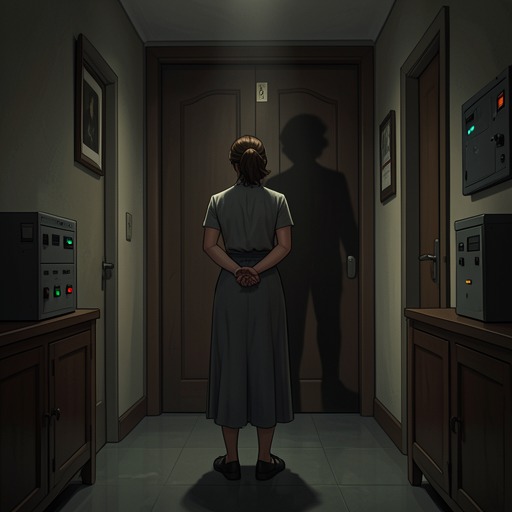
Argument at the Italian dinner and Marianne confides in Connell about abuse
Normal PeopleThe Italian dinner argument and Marianne’s subsequent disclosure to Connell bring private family abuse into the open at a moment when the couple are close but have not fully understood one another. The evening moves from a public dispute over Jamie’s conduct to a private account of threats and violence at home; Connell’s intervention separates Marianne from Jamie, but his first response to her disclosure also exposes how little he has understood.
Causes and Background
The dinner takes place at Marianne’s family holiday home in Italy, where Connell is among the guests. Earlier, he had been planning to work in Dublin through the summer, but reduced hours at his job made it impossible to cover rent and living expenses. He decided he would have to move out of Niall’s place, yet delayed telling Marianne because asking to stay in her apartment felt too much like asking her for money. At a party by a swimming pool, he had considered raising the subject but could not bring himself to do so. The unspoken financial dependence is part of the emotional background to the Italian visit: Connell is already afraid of losing Marianne, while their relationship leaves money unspoken even as it shapes his options.
The immediate conflict begins at the dinner table, when Jamie dismisses the prospect of visiting Venice because, he says, it is full of Asian people taking photographs. Niall calls the remark racist. Jamie responds with sarcasm, and the table falls quiet. Marianne abruptly gets up to fetch dessert; Connell is disappointed that she avoids confronting Jamie, but he says nothing. Her withdrawal is not the end of the tension. When the group begins eating strawberries, Jamie asks why the cream was not brought out. Marianne says it is inside and stands to get it. Jamie looks around for someone to validate his complaint, finds the others avoiding his gaze, then follows her into the kitchen after knocking his chair back.
The Argument in the House
From the table, Connell hears a raised voice and goes inside. He finds Marianne and Jamie at the kitchen counter. Marianne is shivering, while Jamie refills his champagne glass with red wine. When she asks him to put the glass down, he taunts her and drops it, shattering it on the floor. Marianne reacts by lunging toward him as if to strike; Connell steps between them and holds her by the upper arms. Jamie calls her a mental case and says she needs help. Connell does not argue with him. He turns Marianne toward the back door and leads her out, while she offers no resistance.
The movement out of the kitchen gives the scene a stark change in scale: a crowded dinner and a hostile exchange give way to the dark, walled-off part of the garden, where Connell and Marianne can be alone. They walk down the steps and along a line of trees without speaking. Connell holds her until she seems calmer, and their breathing settles into a shared rhythm. He strokes the back of her neck, then releases her. They smoke cigarettes quietly before Marianne asks if she can stay in his room. Connell says the bed is large enough; he does not press her to explain further before they go inside.
What Marianne Tells Connell
In bed, Connell recognizes that sex could happen between them, but the possibility remains unspoken and he does not act on it. Marianne instead tells him that she does not know why she cannot be like other people or make people love her, and says she thinks something was wrong with her from birth. Connell offers reassurance by saying that her family and friends love her. Marianne answers that he does not know her family, then says they hate her. The exchange shifts the scene from comfort to disclosure: Connell has reached for a reassuring generality, and Marianne reveals that the family he has invoked is a source of harm.
She tells him that during a previous argument at home, Alan said she should kill herself because no one would miss her and she had no friends. When Connell asks how her mother reacted, Marianne says Denise was there and responded, as she remembers it, by telling Alan not to encourage her. Marianne then describes Alan following her through the house when he is in a bad mood and entering her room regardless of whether she is asleep. She says he sometimes hits her, though less often since she moved away, and identifies the psychological abuse as more demoralizing. These details make clear that the earlier episode is not an isolated disagreement: Marianne describes a continuing pattern of intimidation in the family home, with her mother present during at least one particularly cruel incident but not intervening protectively.
Connell asks why Marianne never told him while they were together. She says she did not want him to think she was damaged and was afraid he would no longer want her. His response is not immediate explanation or a solution: he cries, says he is sorry, and embraces her. The disclosure makes visible both Marianne’s fear of being rejected if known fully and Connell’s prior failure to recognize the extent of her situation. He had thought of her as damaged already, a thought that sharpens his guilt rather than making him feel vindicated.
Intimacy and Aftermath
After Connell apologizes, they kiss and move toward renewed sexual intimacy, but Marianne stops and draws away. Connell waits until he can speak without his voice breaking, then apologizes again; she squeezes his hand before turning away. The scene therefore does not resolve the disclosure through sex or a declaration of rescue. Physical closeness offers a brief form of comfort, but Marianne retains the ability to set a limit, and Connell is left with regret over how quickly he moved from hearing her pain to initiating intimacy.
The significance of the dinner lies in the contrast between visible conflict and concealed harm. Jamie’s behavior at the meal is witnessed by the group, yet Connell does not see what happens between Jamie and Marianne in the kitchen until the argument has escalated. Marianne’s account of Alan, in turn, explains a family reality that Connell had not known even when he and Marianne were together. The disclosure deepens their understanding without making the harm disappear: Connell can listen, apologize, and hold her, but he cannot undo the family’s conduct or the silence that kept it hidden. The episode joins a public confrontation with a private revelation, turning an evening of strained hospitality into a moment of painful recognition between them.